01
Mindset & expectations
What day trading is (and isn’t). Survival first. Why most accounts fail at risk, not “entries.”
A calm MNQ/MES process: key levels, wait until 9:45 ET for the opening range, trade real breakouts, and know when not to trade. No signals. No income promises.
Education only — not financial advice. Trading involves risk of loss.
Both teach. Process over highlight reels.
You learn the rules — you don’t outsource decisions.
Stop, size, and daily limits before the entry.
Not financial advice. No performance guarantees.
Skeptical buyers welcome. If you want shortcuts or guaranteed income, this isn’t it.
A printable gate before every session: readiness, setup confirmation, stop/size/R, invalidation, and when to sit out. Then upgrade to the full MNQ & MES playbook when you’re ready.
Free PDF via Gumroad · no spam. Upgrade to Strategy, Prop Risk, or Psychology when you’re ready.
Built for MNQ/MES day traders. Focus stays on process, risk, and honest review — not signals or income claims.
What day trading is (and isn’t). Survival first. Why most accounts fail at risk, not “entries.”
Pre-market prep → context → setup → risk → execute → journal. A loop you can repeat.
Higher-timeframe bias, key levels, ranges vs. trends — reading the map before the trigger.
How to define a setup in writing: location, trigger, invalidation. Examples to study (not signals).
Stop placement, position sizing from R, max loss per day, and when to stop trading.
Entries, partials, trails, and avoiding the classic mistakes: chasing, moving stops, revenge sizing.
What to record, how to grade process vs. P&L, and reviewing losses without ego.
Annotated chart walkthroughs: good trade, skipped trade, and a plan-break — with lessons.
Short previews of the tone — calm, specific, and honest about when not to click.
If you can’t name stop distance and dollar risk in one breath, you’re not ready to size. The checklist forces the numbers first.
A clean pattern in the middle of nowhere is still noise. Favour trades at levels you’ve marked in advance — then wait for your trigger.
Sitting out when context is unclear protects capital and confidence. The best traders aren’t always in — they’re selective.
Start free with the checklist. When you want depth, pick the playbook that matches your bottleneck. Education only — not financial advice. One-time PDF downloads. No signals. No income promises.
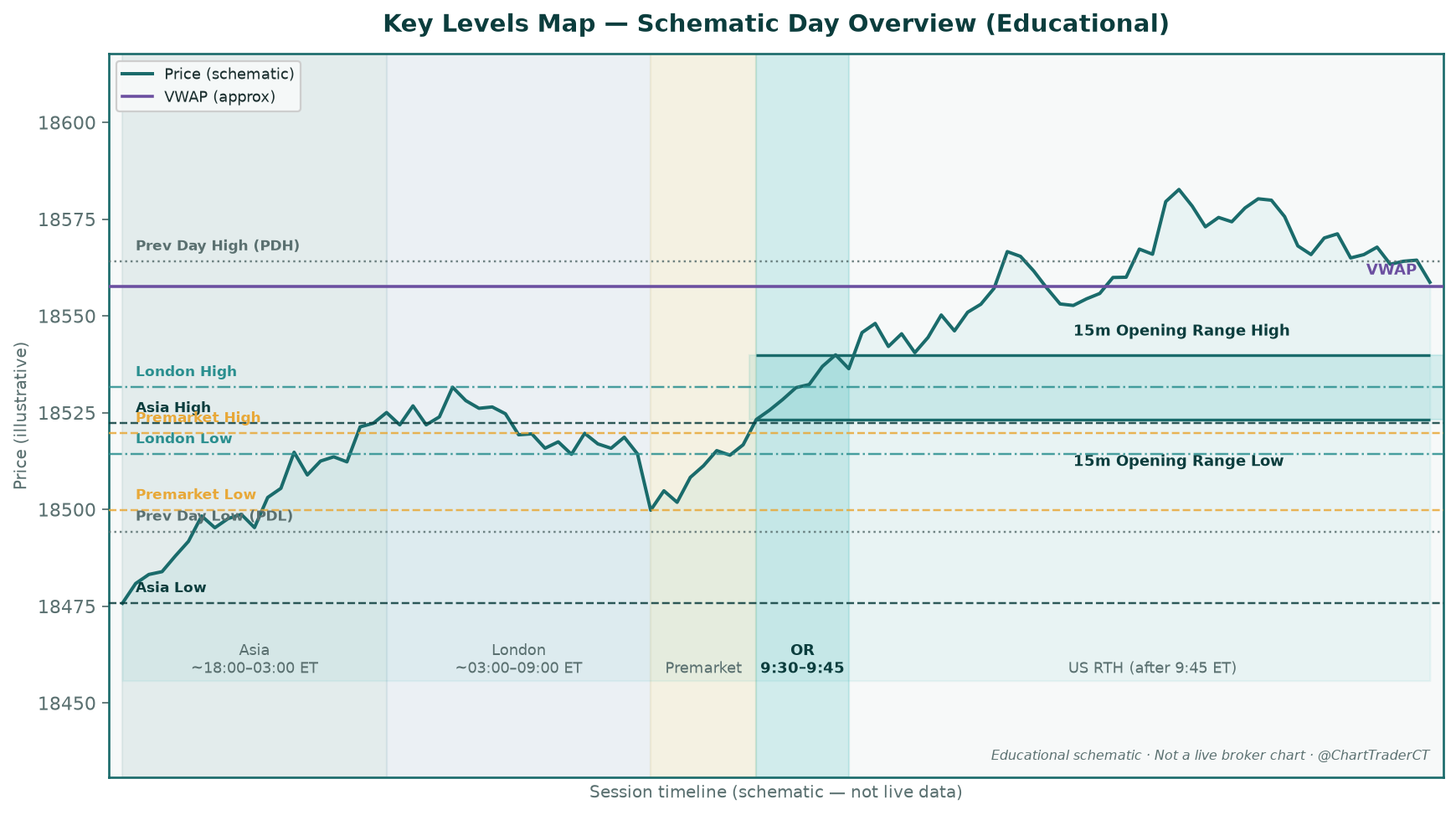
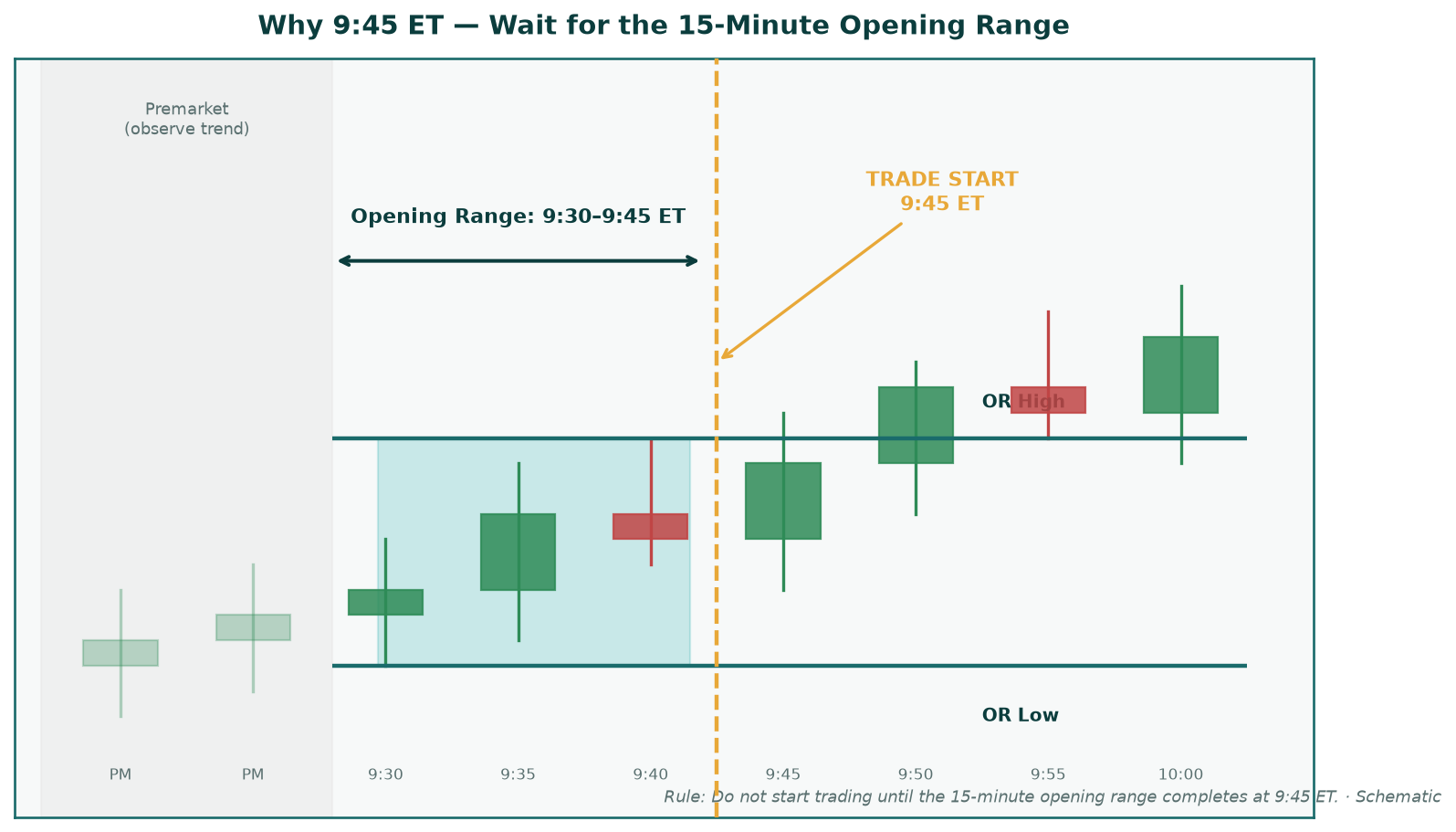
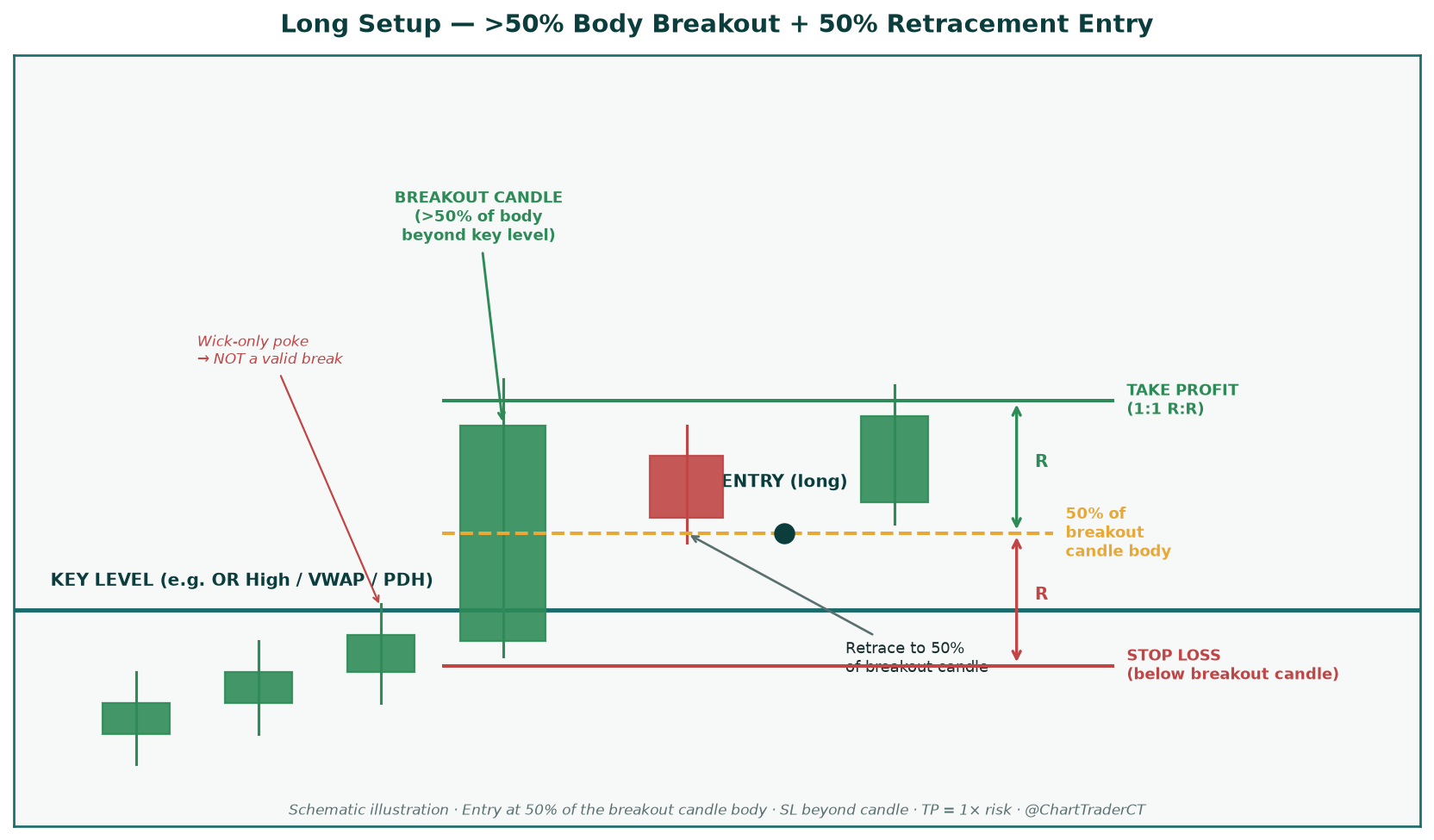
Key levels, wait until 9:45 ET for the opening range, breakout + 50% retracement entry model, risk, and a one-page rules summary — with diagrams.
Eval vs funded, trailing vs EOD drawdown, daily loss buffers, MNQ/MES sizing worksheets, news blackouts, fail modes, and compliance journaling.
FOMO, revenge, overtrading, tilt ladders, process-over-P&L grading, no-trade as a position, and rebuild protocols after a blow-up.
Prefer to start free? Grab the pre-trade checklist first.
Key levels, the 9:45 ET open, trend breakouts, and the 50% retracement entry model — with diagrams and a one-page rules summary. Pair with Prop Risk ($47) and Psychology ($37) when those are your bottlenecks. Prefer to start free? Grab the pre-trade checklist first.
Schematic examples from the playbook — key levels map, the 9:45 opening-range rule, and the breakout + 50% retracement entry.
No. The Chart Trader is education: rules, risk process, and how to think about charts. You make your own decisions.
No. Everything here is educational only and is not financial, investment, or trading advice. Markets involve risk of loss. Do your own research and consider your situation carefully.
Newer day traders (and anyone rebuilding discipline) who want a structured gate before entry. It’s intentionally simple so you’ll actually use it.
The process (context → setup → risk → review) is market-agnostic. Examples and emphasis may lean toward liquid day-tradable instruments — edit this answer once you lock your focus (e.g. US equities, futures, FX).
Yes. Day trading involves substantial risk of loss and is not suitable for everyone. Many traders lose money. Never trade with money you can’t afford to lose. There are no performance guarantees.
Educational content only — not financial advice. The Chart Trader (@PrestonMNQMES) provides educational materials about day trading concepts, risk management, and chart analysis. Nothing on this page or in any related materials constitutes a recommendation to buy, sell, or hold any security, futures contract, forex pair, crypto asset, or other instrument. Trading and investing involve a substantial risk of loss and are not suitable for every investor. You can lose some or all of your capital. Past results — including any examples, screenshots, or hypotheticals — do not guarantee future performance. No earnings, income, or performance claims are made. You are solely responsible for your own trading decisions. If you need advice, consult a qualified licensed professional.